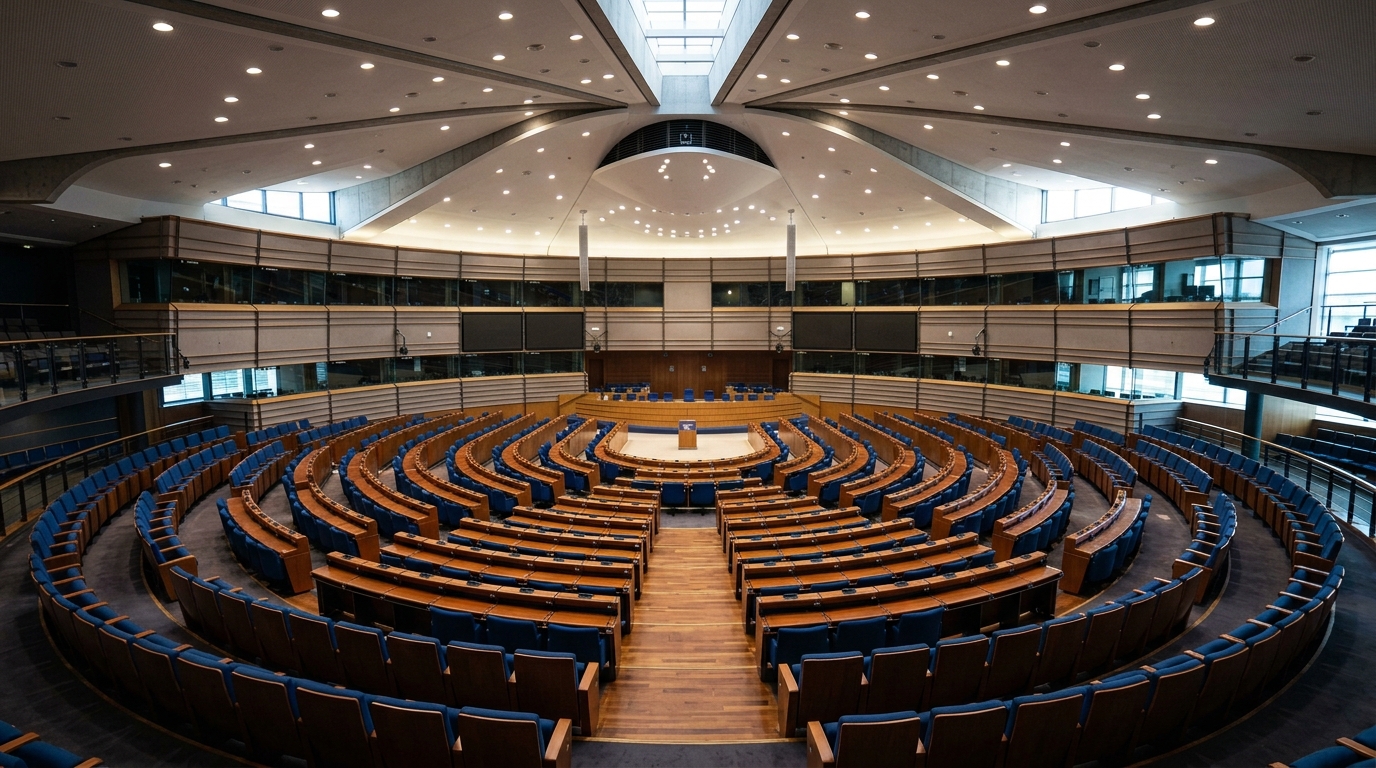
26 March 2026. The European Parliament voted today on the so-called AI Act Simplification Omnibus — a package of amendments to the 2024 AI Act. The result: 569 in favour, 45 against, 23 abstentions. An overwhelming majority.
What does this mean for you? In short: more time to meet the strictest obligations, a new prohibition that wasn’t in the original law, and less administrative burden if your sector is already covered by other EU rules. But — and this is crucial — this is not yet final law. Negotiations with the Council are only just beginning.
What applied yesterday still applies tomorrow — almost
The foundations of the AI Act have not been touched. The risk category system remains intact: prohibited AI, high-risk AI, general purpose AI, and low-risk AI. The prohibitions — think government social scoring, manipulative systems targeting vulnerable groups, or real-time biometric surveillance in public spaces — still take effect on 2 August 2026. That date has not moved.
What has shifted are the application dates for high-risk obligations. And that is precisely the category that directly affects most businesses.
The new deadlines
The AI Act uses Annex III: a list of high-risk applications. Think AI systems in biometrics, critical infrastructure, education, recruitment, essential services, law enforcement, justice and border management. For all those systems, there is now a new date: 2 December 2027.
For AI systems that also fall under sectoral EU safety legislation — medical devices, toys, radio equipment, and related sectors — it goes a step further: 2 August 2028. Those businesses get the longest delay, because the legislator wants to avoid overlapping obligations.
The Parliament’s reasoning: the guidelines and standards that businesses need to know how to comply simply do not exist yet. The delay buys time — not for inaction, but for proper implementation.
Watermarking: that one is coming soon
While the high-risk deadlines slide forward, there is one obligation that may catch you off guard: watermarking. Providers of AI tools that generate audio, images, video or text must label that content with an origin marker — an invisible but detectable signal that says: this was made by AI.
Deadline: 2 November 2026. That is seven months from now. This affects everyone publishing AI-generated content: advertising agencies, media companies, marketing teams, communications departments. The tool providers are responsible for the technical implementation, but as a user you need to know the obligation exists — and push your suppliers to act on it.
New prohibition: nudifier apps
The original AI Act banned a range of applications but left a gap. Parliament closes that gap today. An explicit ban is introduced on nudifier systems: AI that creates sexually explicit images of identifiable real persons without their consent.
This is not a hypothetical problem. Such tools exist and are being used. They primarily target women and girls. The ban does not apply to systems with effective safety measures that prevent misuse, but the threshold is high: the exception is narrow, the prohibition broad.
For most businesses this is not an operational issue. It is, however, a signal: the EU is prepared to expand the prohibited list as technology evolves. The list is not closed.
Good news for growing businesses
The original AI Act provided support for SMEs: simplified procedures, reduced documentation requirements, access to regulatory sandboxes. But what if your business outgrows SME status? You would lose all those advantages in one step.
Parliament now extends those measures to small mid-cap enterprises — businesses that have just crossed the SME threshold. In practice: more breathing room as you scale.
What this is not yet
This is the European Parliament’s position. Nothing more, nothing less. The next step is the trilogue: negotiations with the Council of the EU until both institutions agree on a final text. Those negotiations can take months. The final text may differ from what was voted today on specific points.
That means: the direction is clear, the details can still shift. Follow the developments. Adjust your implementation plan once the final text is published. And do not conclude that delay equals exemption — the obligations are coming, they are just coming later.
“The delay buys time for proper implementation. It is not a free pass to do nothing.”
What you can do now
1. Map your AI use
Which AI systems do you use today? Which are high-risk? The new deadlines only matter if you know which category your tools belong to. That mapping can be done now — and will be required regardless.
2. Ask your AI providers about watermarking
Do you use tools that generate content? Ask your supplier how they plan to implement the November 2026 watermarking requirement. That is a legitimate supplier question, even if you are a small customer.
3. Watch the trilogue
Negotiations with the Council start now. Expect a final text before the end of 2026. This page will follow developments as they happen.
Source: European Parliament press release, 26 March 2026