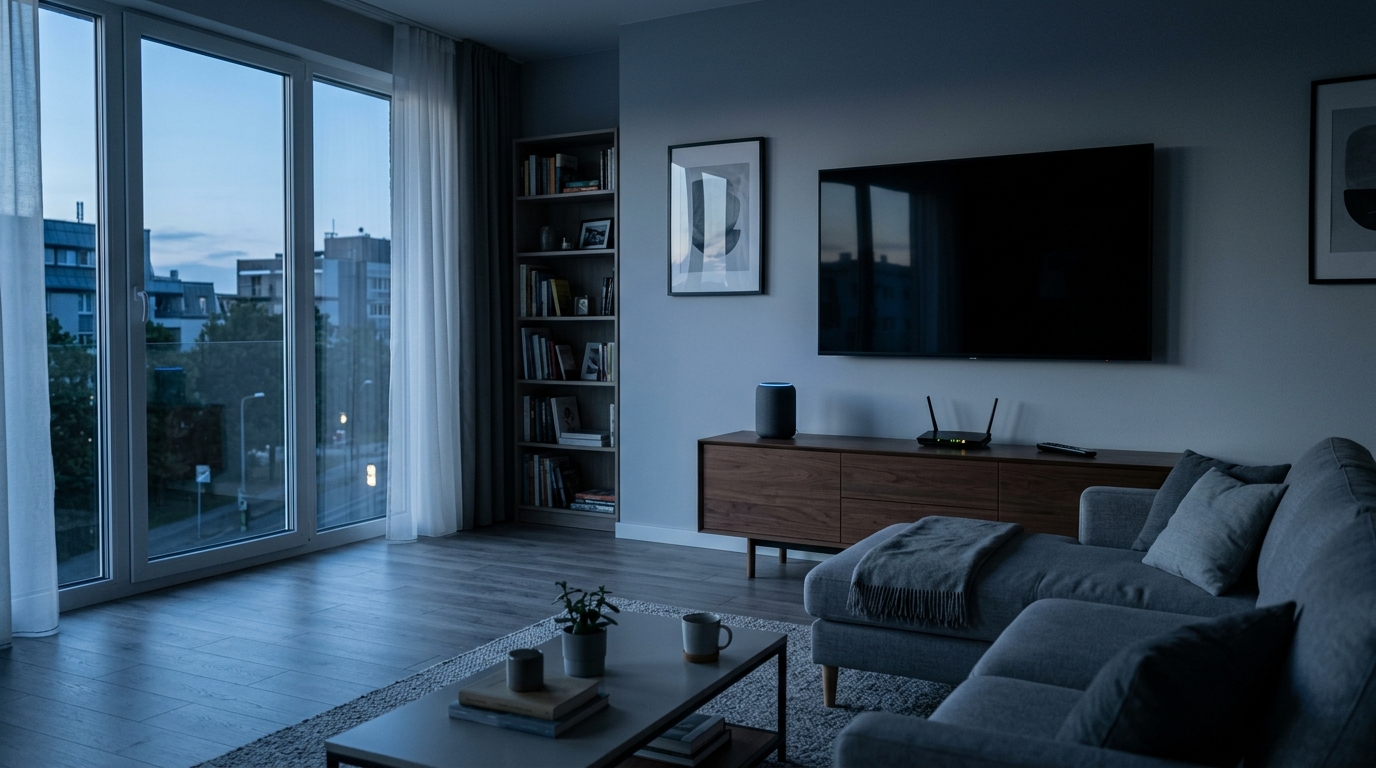
A smart home is a home that works for you. That is the promise. The lights come on when you arrive. The thermostat knows when you wake up. The speaker plays music when you ask.
But a smart home is also a home that works for the platforms that made the devices. And those two promises do not always sit side by side. They often stand in direct opposition.
What Is Actually Inside a European Home Today
Not hypothetically. Not in the future. Today.
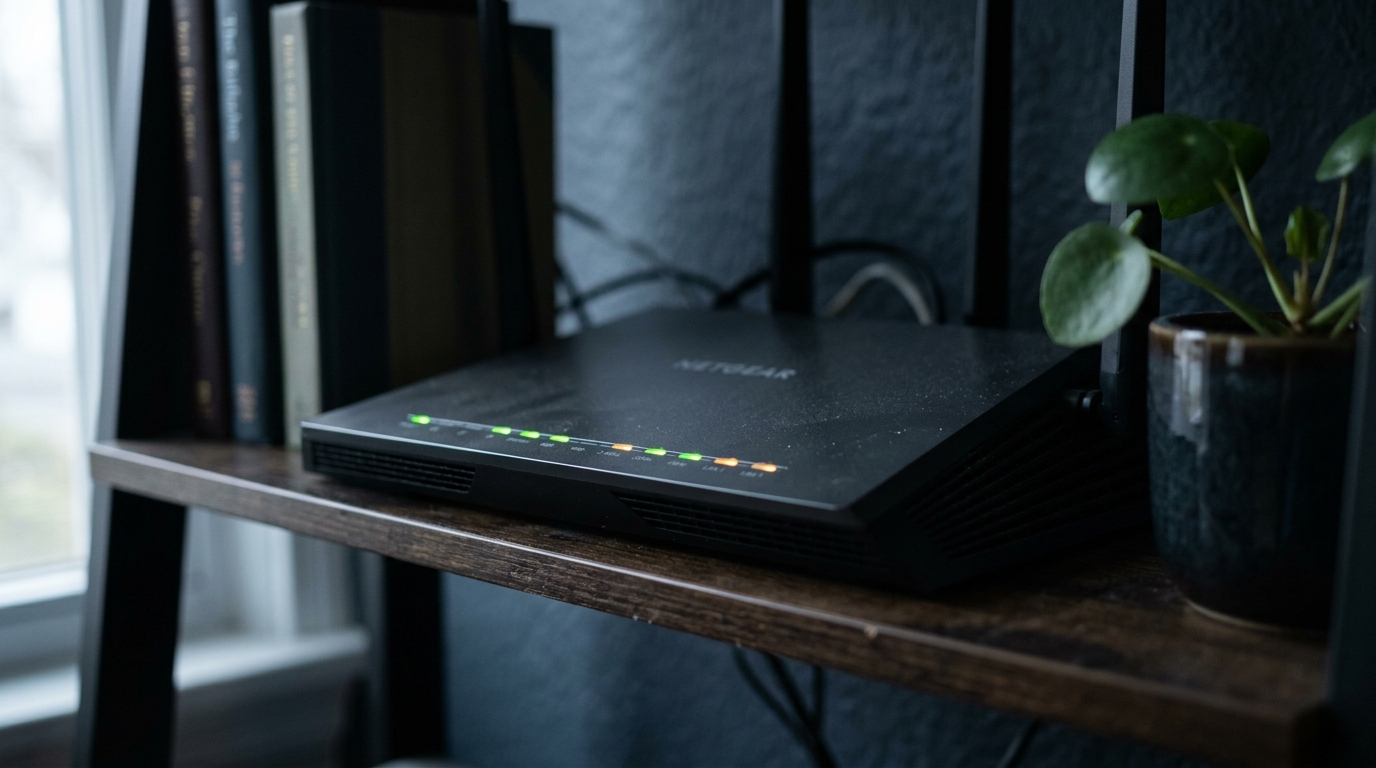
The router. Your router maps every device on your network. Name, MAC address, connection times. Odido — a major Dutch provider — forwarded that data for three years to Lifemote, an AI startup in Turkey. Without customers knowing. When it came to light, a quiet patch arrived five days later. No press release. No apology.
The smart TV. Your television takes a screenshot every half-second of whatever is on screen. Not just Netflix — everything. A mirrored laptop screen, a video call, a home video. Samsung’s ACR system matches those screenshots against a database and sells the viewing profile to advertising networks and data brokers. Vizio once generated a gross margin on viewing data more than double the gross margin on television sales. The hardware is subsidised by your behaviour.
The smart speaker. Amazon, Google, Apple — they retain audio recordings from your home. Human employees listen in to improve speech recognition. You gave consent for this. In the terms of service. Which you did not read.
The smart glasses. Meta’s Ray-Ban smart glasses sold seven million units in 2025. Marketing slogan: “Designed for privacy, controlled by you.” The reality: footage was sent to Meta’s servers, filtered to Nairobi, and reviewed by employees of an external contractor. Those employees saw people undressing. People having sex. Private spaces never intended for a camera. Meta confirmed the practice. The faces were “blurred”, they said. The employees said the blurring was inconsistent.
The smart doorbell. Gives Amazon a video archive of everyone approaching your front door.
The thermostat. Tells Google when you are home, when you sleep, how warm you keep your house.
The baby monitor. Connected to the manufacturer’s external servers. Audio and video from the most protected room in your home.
Each device bought separately. Each data collection buried in a separate document. Each company pointing to a policy page when something goes wrong.
The Fine That Does Not Hurt
Since the GDPR came into force in 2018, Europe has issued approximately 7.1 billion euros in fines. Meta paid €1.2 billion. That was four days of revenue. LinkedIn paid €310 million. TikTok €530 million.
Each of those companies kept operating the day after the fine.
The fine is not a punishment. It is a tax on data collection. Calculated into the spreadsheet. Cheaper than compliance. In Spain, Vodafone received more than thirty GDPR fines in four years while continuing illegal marketing calls. In Croatia, a telecoms operator was fined for forwarding customer data to Serbia without adequate safeguards — and for continuing to do so after being ordered to stop.
This is not a system of accountability. It is a system of taxation.
“A smart home is not a home that works for you. It is a home that works for the platforms that sold the devices.”
What Leaves Your Home Every Day
Let’s be specific. Every device generates a data stream. Those streams are invisible. But they are real.
The router logs every device on your network and sends metadata to your provider. The TV sends screenshots to an advertising system. The smart speaker sends audio to servers for processing. The smartphone continuously sends location data to multiple parties. The thermostat tells Google when you are home. The doorbell gives Amazon a video archive of your street.
That is what leaves an average European home every day. Without anyone making a conscious decision. Without anyone seeing it.
The value generated flows outward to external servers. Your viewing behaviour becomes an advertising profile. Your location pattern is sold to data brokers. Your voice data improves products for the manufacturer. Your presence pattern may become an insurance profile.
All that value is created in your home. By you. Without compensation.
How Local AI Gives Your Home Back
The architectural solution is simple to state: what if the intelligence stayed with you?
A local smart speaker. A smart speaker running locally — on your own hardware, with an open-source speech model — hears you, processes your question locally, and responds. No audio file to Amazon. No human employee listening in. The functionality is identical. The data flow is fundamentally different. whisper.cpp handles speech recognition locally. Ollama with an open-weight model answers your question. Everything on hardware in your home.
A private screen. Disabling ACR on a Samsung TV is technically possible: Settings → Support → Terms & Privacy → Viewing Information Services → off. But disabling is not the same as removing. The next firmware update may turn it back on. The radical solution: ignore the smart TV functions entirely and use an external media player — ideally a local media server.
Your own network infrastructure. A Pi-hole on your home network blocks advertising and tracking servers at DNS level for all devices at once. One central block, no per-device installation. A router running open firmware gives full control over what your network does.
Local services instead of cloud. Google Calendar becomes Nextcloud. Google Drive becomes Syncthing. Google Photos becomes Immich. Spotify becomes your own music collection on Navidrome. ChatGPT becomes Ollama on your own hardware. Each step is a step where less data leaves your home.
AETHER: Proof That It Works
AETHER is a local AI platform built on ordinary desktop hardware. Stable for more than three months in daily use. Android apps that connect to it. Calendar fully local. Files local. AI assistant local. Google services replaced for an entire household.
What AETHER proves is straightforward: this is not a theory. It does not require specialist technical expertise. It is stable enough for daily use. It is cheaper than the sum of all the cloud subscriptions it replaces.
The first user was the household that built it. That is the most honest test.
The Postman at the Door
Google, Meta, Microsoft — they are postmen. But under the current model, they do not stop at the door. They walk straight in. Through the hallway, across the living room, into the bedroom. They note what is on your television. They listen to what is being said. They inventory what you have stored. At the end of the day, they take all their notes back outside with them.
A local AI assistant changes that. The postman still comes — Google wants to help you navigate somewhere, Meta wants to deliver a sponsored message, Microsoft wants to offer an update. But the door is opened by your own system. It stands at the threshold. “What do you want?” It takes in what is necessary. And the postman stays outside.
Your home responds. Your home shares what is needed. But the right to invite someone in no longer belongs to the postman — it belongs to you.
The difference is not the functionality. It is the architecture. And that architecture is available today.
Three Steps You Can Take Now
1. Disable ACR on your TV
Samsung: Settings → Support → Terms & Privacy → Viewing Information Services. LG: Settings → General → About TV → User Agreements. Five minutes of your time, and the screenshot stream stops immediately. Check again after the next firmware update.
2. Install Pi-hole on your network
Pi-hole is software that runs on a small Raspberry Pi and blocks advertising and tracking servers for every device on your network at once. It also blocks most of the ACR data stream if the TV setting gets reset. One-time setup of a few hours. Free thereafter.
3. Replace one cloud service with a local version
Pick one service you use daily — calendar, photos, notes — and replace it with a local alternative. Nextcloud for calendar and files. Immich for photos. Obsidian for notes. Not everything at once. Every step counts.