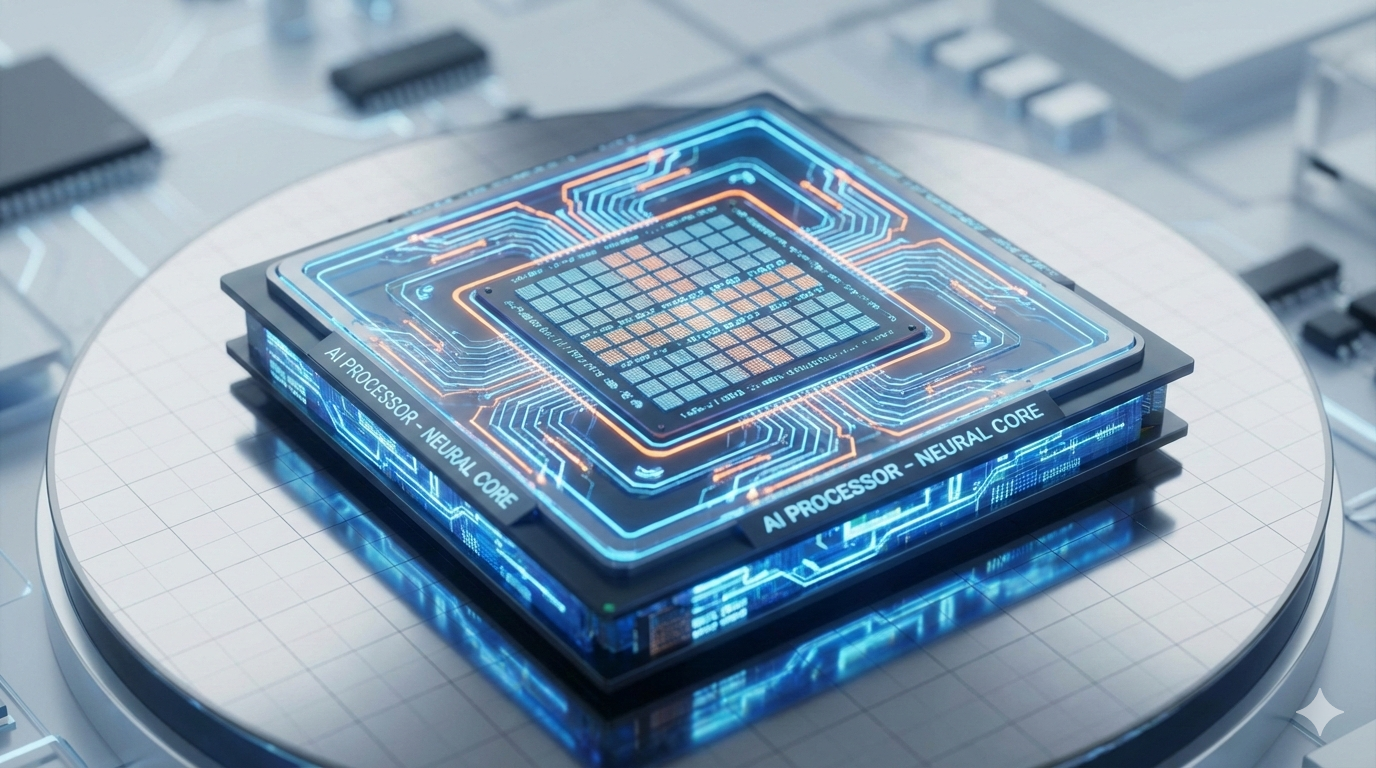
How a Dutch startup is bringing Digital In-Memory Computing to edge AI — and what it means for Europe's semiconductor independence.
The Dutch semiconductor powerhouse Axelera AI has rapidly evolved from an Eindhoven-based startup into a formidable challenger in the global AI market. Founded in 2021 through a merger of talent from Bitfury AI (led by CEO Fabrizio Del Maffeo), IBM Research Zurich (led by Evangelos Eleftheriou), and researchers from ETH Zurich, imec, Qualcomm, and Google, the company represents a concentration of world-class semiconductor expertise.
By focusing on speed, sustainability, and technological sovereignty, Axelera is successfully bringing high-performance AI from centralised data centres to the "edge" — the devices and systems where data is actually generated.
A Breakthrough in Architecture: D-IMC vs. The GPU Status Quo
To understand Axelera's impact, look at the Von Neumann bottleneck that plagues traditional computing. In a standard NVIDIA GPU, data constantly travels between memory and processor. This journey consumes roughly 90% of the total energy used in AI processing.
Axelera's Digital In-Memory Compute (D-IMC) flips this entirely. Built on SRAM technology, each memory cell becomes a compute element performing digital matrix-vector multiplications in-place, without data movement. Each core delivers over 50 TOPS (Tera Operations Per Second), achieving 15 TOPS per Watt — dramatically more efficient than traditional architectures.
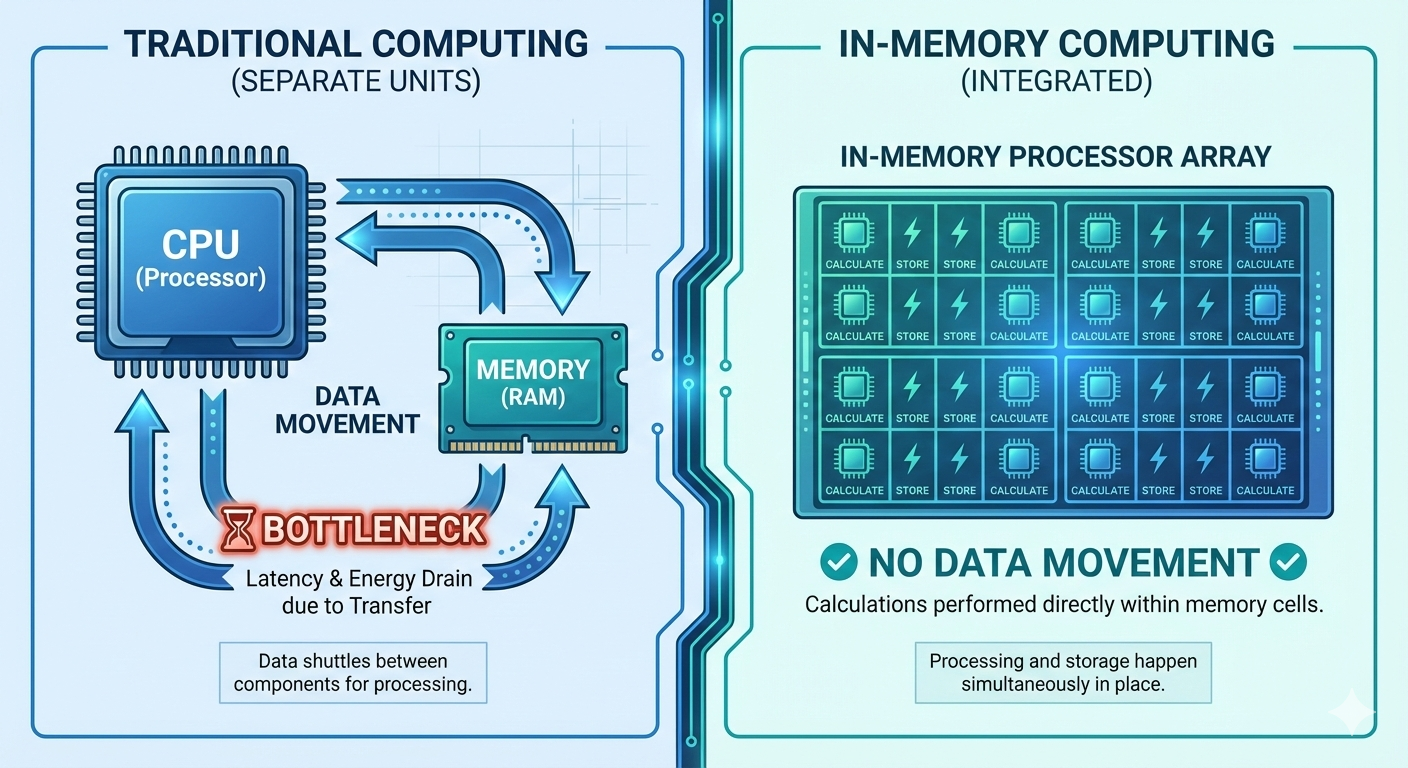
By performing calculations directly inside the digital memory, they eliminate the constant data shuffling that drains energy and limits performance. The result: processing that is both faster and up to 10x more power-efficient than GPU-based solutions.
While NVIDIA's H100 or A100 chips excel at training massive models in giant data centres, edge AI applications have different requirements. These localised tasks benefit from specialised architectures optimised for inference rather than training.
- Efficiency: Axelera's Metis AIPU delivers 214 TOPS at just 14 watts — 15 TOPS/W. A single Metis chip can process 24 concurrent 4K camera streams running YOLOv5 object detection, a feat typically requiring multiple GPUs drawing hundreds of watts.
- Precision: Unlike competitors using Analog In-Memory Computing (prone to noise), Axelera uses a Digital approach. Their post-training quantisation achieves 99.9% relative accuracy compared to FP32 baseline models.
- Mixed-Precision: The architecture supports INT4, INT8, and INT16 precision modes, allowing developers to optimise the performance-accuracy trade-off per workload. For computer vision tasks, INT8 delivers near-FP32 accuracy while reducing memory bandwidth by 4x.
The Power of the "Edge": Real-World Adoption
Axelera isn't a lab project. Since September 2023, the company has been shipping production Metis hardware to customers worldwide.
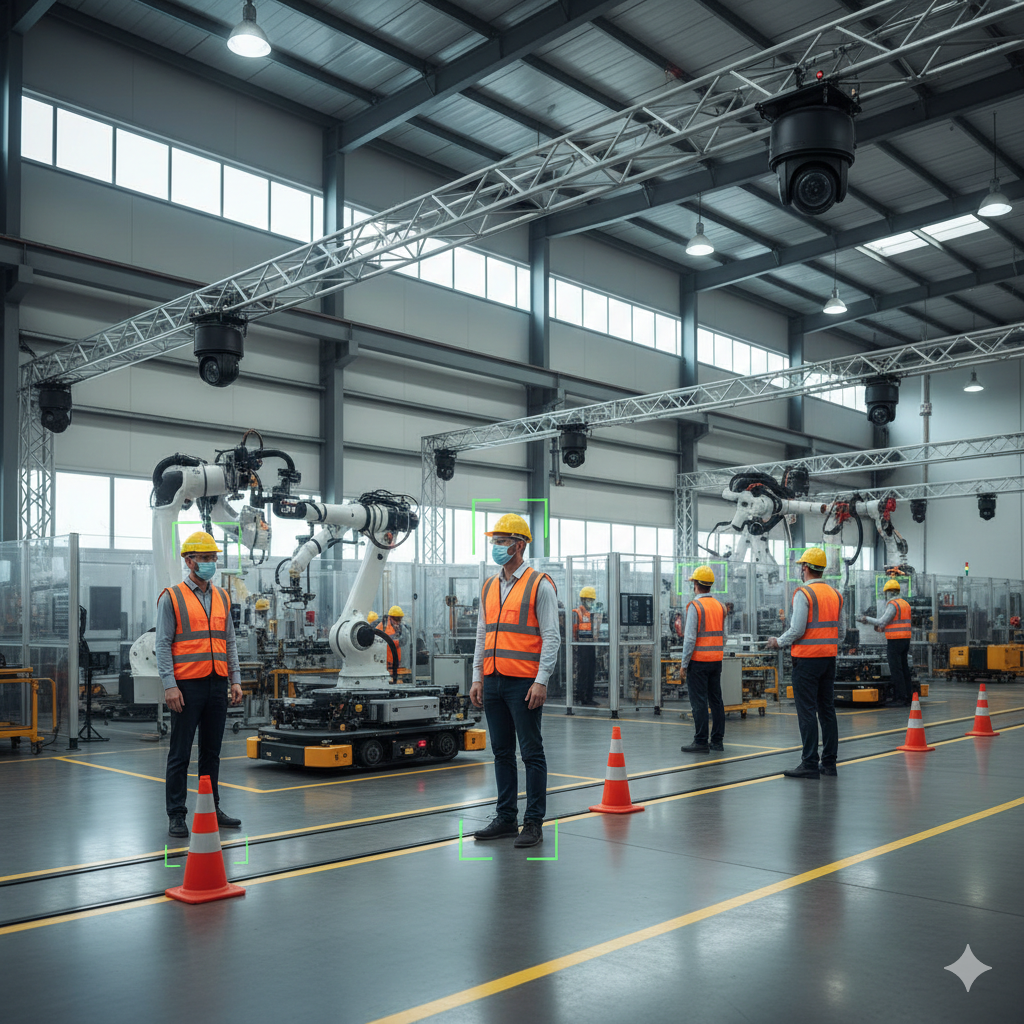
- Industrial Automation: In partnership with Fogsphere, Axelera powers real-time PPE monitoring systems that detect whether workers are wearing helmets, vests, and safety gear — processing multiple camera feeds with sub-100ms latency.
- Manufacturing & Quality Control: Smart factories use Metis-powered vision systems for automated inspection, detecting defects in products moving at high speed. A single M.2 card handles 16+ concurrent camera streams.
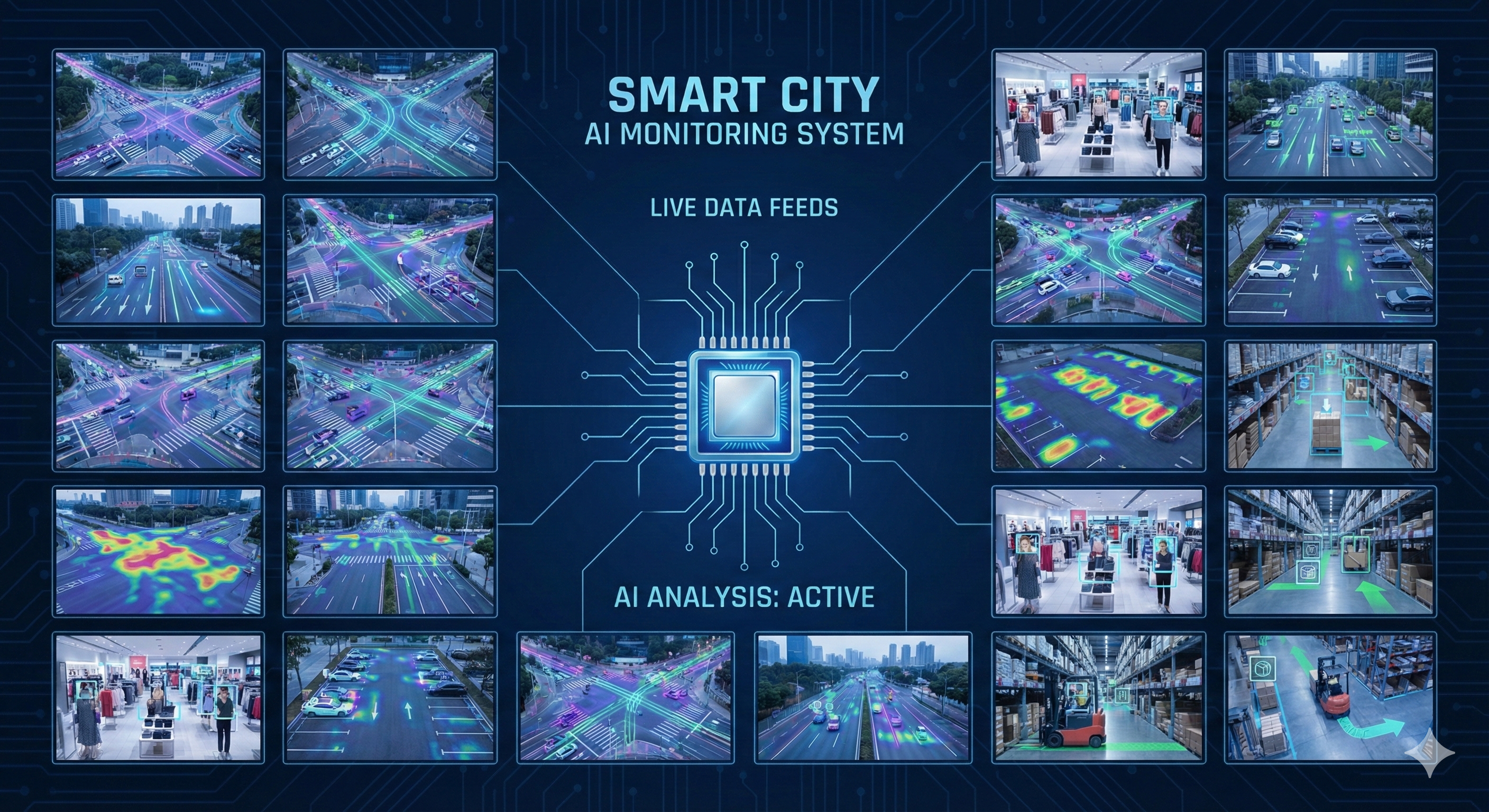
- Smart Cities & Retail: Macnica ATD Europe, Axelera's first European distributor, integrates Metis into traffic management systems, parking analytics, and retail customer behaviour analysis.
- Space Applications: The European Space Agency (ESA) has selected Axelera technology for space missions, where chips must perform reliably in radiation-heavy, non-permissive environments with minimal human intervention. ESA Senior Engineer Gianluca Furano: "With missions that may take years to develop and end up staying in space for over a decade, we must choose technology that can continue to perform under non-permissive environments."
The Competitive Landscape
Axelera is not the only company pursuing edge AI dominance:
- Hailo (Israel): Their Hailo-8 chip delivers 26 TOPS at 2.5W (10.4 TOPS/W) — impressive efficiency but lower absolute performance than Metis's 214 TOPS. Focuses primarily on automotive and smart camera applications.
- Graphcore (UK): Once valued at $2.8B, targets data centre AI with their IPU architecture but has struggled against NVIDIA's ecosystem dominance.
- Intel Movidius: The Myriad X VPU delivers 4 TOPS at ~2W — solid for simple edge applications but lacking horsepower for multi-stream 4K video.
- Google Edge TPU: Optimised for TensorFlow Lite, delivers 4 TOPS at 2W but locks developers into Google's ecosystem.
Axelera's approach combines high absolute performance (214 TOPS), excellent efficiency (15 TOPS/W), and ecosystem flexibility through the Voyager SDK's support for PyTorch, TensorFlow, and ONNX — addressing a gap between simple edge processors and power-hungry data centre GPUs.
Securing European Technological Sovereignty
Beyond technical specs, Axelera is part of Europe's push toward digital autonomy. Historically, Europe has relied on non-EU suppliers, creating risks around supply chain stability, data privacy, and geopolitical vulnerability.
Axelera is headquartered at the High Tech Campus in Eindhoven — a deliberate choice leveraging the semiconductor ecosystem anchored by ASML, the world's only producer of extreme ultraviolet (EUV) lithography machines.
The company has raised over $200M across multiple rounds:
- Seed ($12M, Sept 2021): Led by Bitfury with participation from imec and Innovation Industries
- Series A ($50M, 2022–2023): Led by Innovation Industries, with Samsung Catalyst Fund, CDP Venture Capital, Federal Holding and Investment Company of Belgium (SFPIM), and others
- Series B ($68M, June 2024): Europe's largest oversubscribed Series B in fabless semiconductors
- EU DARE Grant (€61.6M, March 2025): Part of the EuroHPC Joint Undertaking, to develop the Titania chiplet for high-performance computing
Through EU-funded initiatives, Axelera is helping build "AI Factories" — sovereign infrastructure for training and deploying large-scale models without dependence on US or Chinese cloud providers. Their chips are being integrated into national supercomputing centres like Cineca in Italy.
The Product Roadmap: From Metis to Titania
Axelera's product strategy follows Greek and Roman mythology naming:
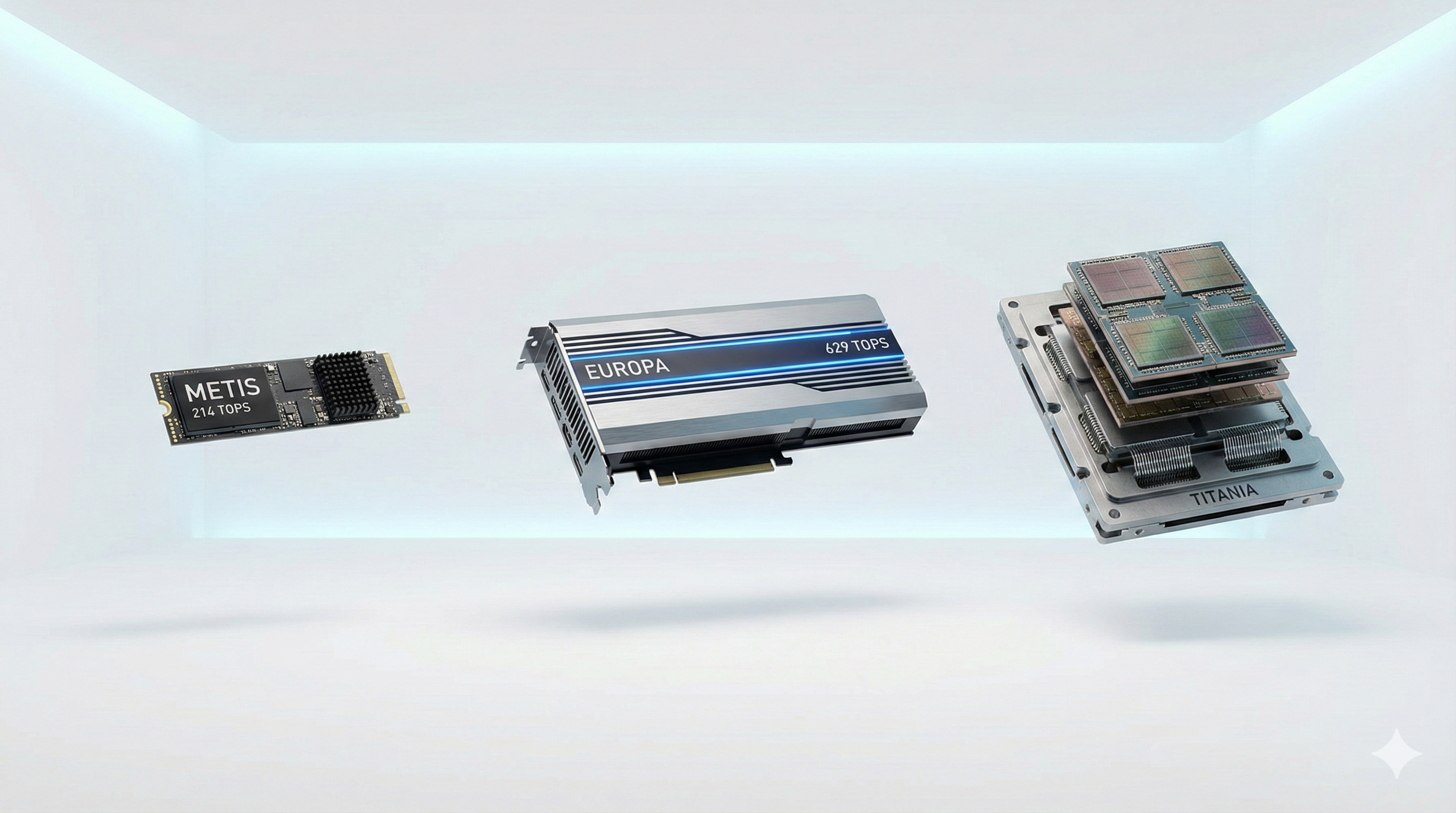
- Metis (Greek goddess of wisdom): The first production chip, shipping since September 2023. M.2, M.2 Max (up to 16GB), and PCIe form factors. 214 TOPS at 14W. Optimised for computer vision: object detection, classification, segmentation.
- Europa (Zeus's lover): The next-generation chip targeting 629 TOPS. Designed to handle both computer vision and generative AI (LLMs/VLMs) at the edge. Expected: 2026. A 3x performance jump over Metis.
- Titania (a Saturn moon): A chiplet-based architecture for high-performance computing environments — data centres and supercomputers. Co-developed under the €61.6M EU DARE grant. The chiplet approach allows customers to scale from edge to cloud using the same D-IMC technology.
The Business Case for Edge AI
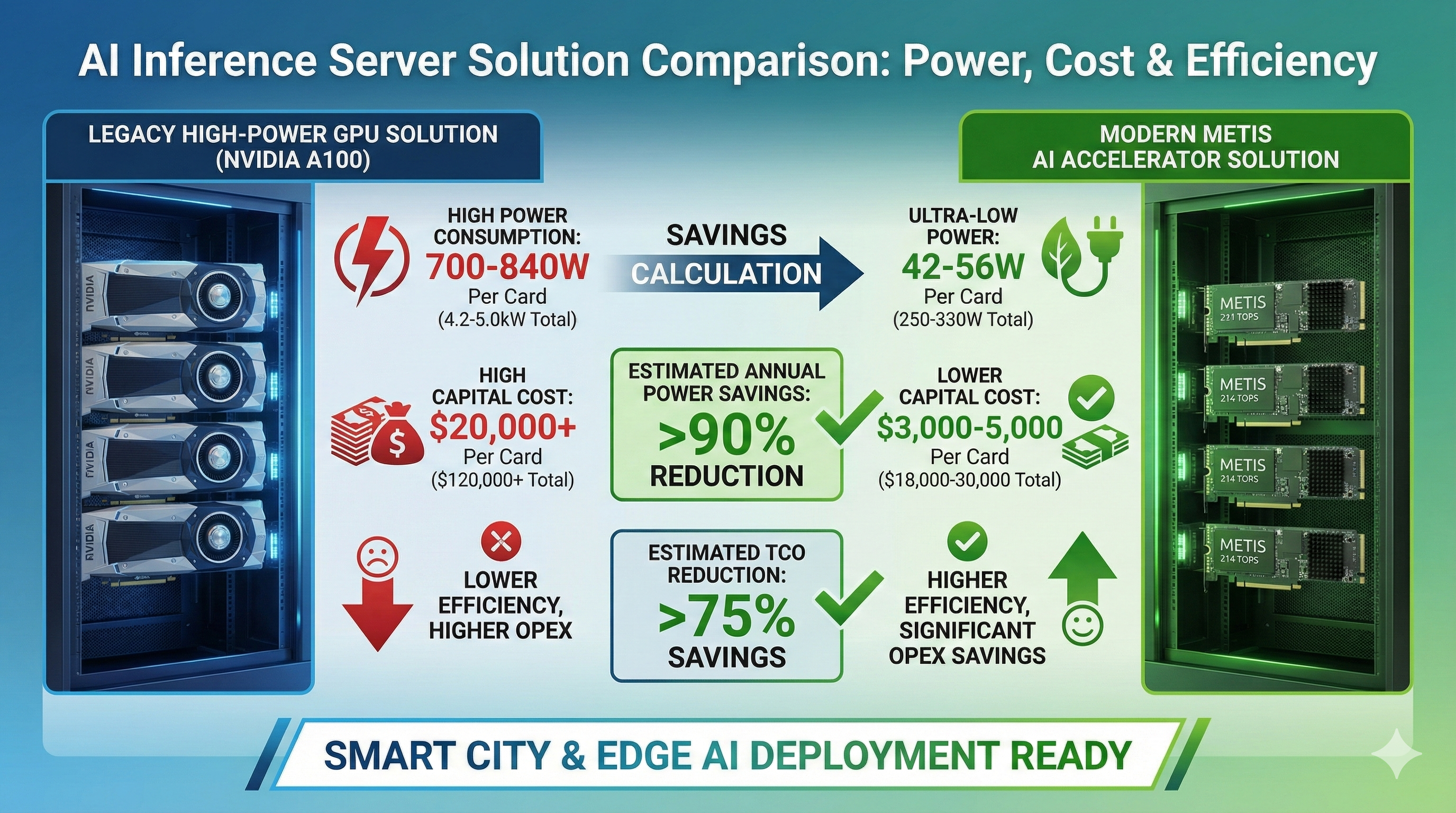
For industrial customers, the economics are compelling. Consider a warehouse with 50 4K cameras:
- GPU-based solution: 10–12 NVIDIA T4 GPUs (~70W each) = 700–840W, ~$20,000+ in hardware
- Metis solution: 3–4 Metis PCIe cards (~14W each) = 42–56W, estimated ~$3,000–5,000 in hardware
Over a year of 24/7 operation at €0.30/kWh, the Metis solution saves roughly €4,500 in electricity costs alone, while reducing cooling requirements and carbon footprint. For companies deploying hundreds of sites, these savings multiply dramatically.
The market timing is favourable: research firms project the edge AI accelerator market growing from $8B in 2024 to over $50B by 2030, with computer vision representing the largest segment. With approximately $200 million in funding, production silicon shipping, and partnerships with major OEMs like Dell, Lenovo, and Advantech, Axelera is positioned for a global rollout.
The first shipments of Europa-based systems in 2026 will test whether European silicon can truly compete in generative AI, not just computer vision.
The Bottom Line
Axelera demonstrates that specialised edge AI architectures can deliver comparable performance to data centre solutions while using a fraction of the power and cost. Together with other European semiconductor initiatives, companies like Axelera are helping establish a more balanced global AI infrastructure.
The future of AI likely involves both centralised training and distributed edge inference — and Europe is building the tools to participate meaningfully in both.
This article is part of an ongoing research series accompanying The Great Return: Why 2026 Marks the Tipping Point for Local AI Migration in Europe — published February 2026 on Zenodo.