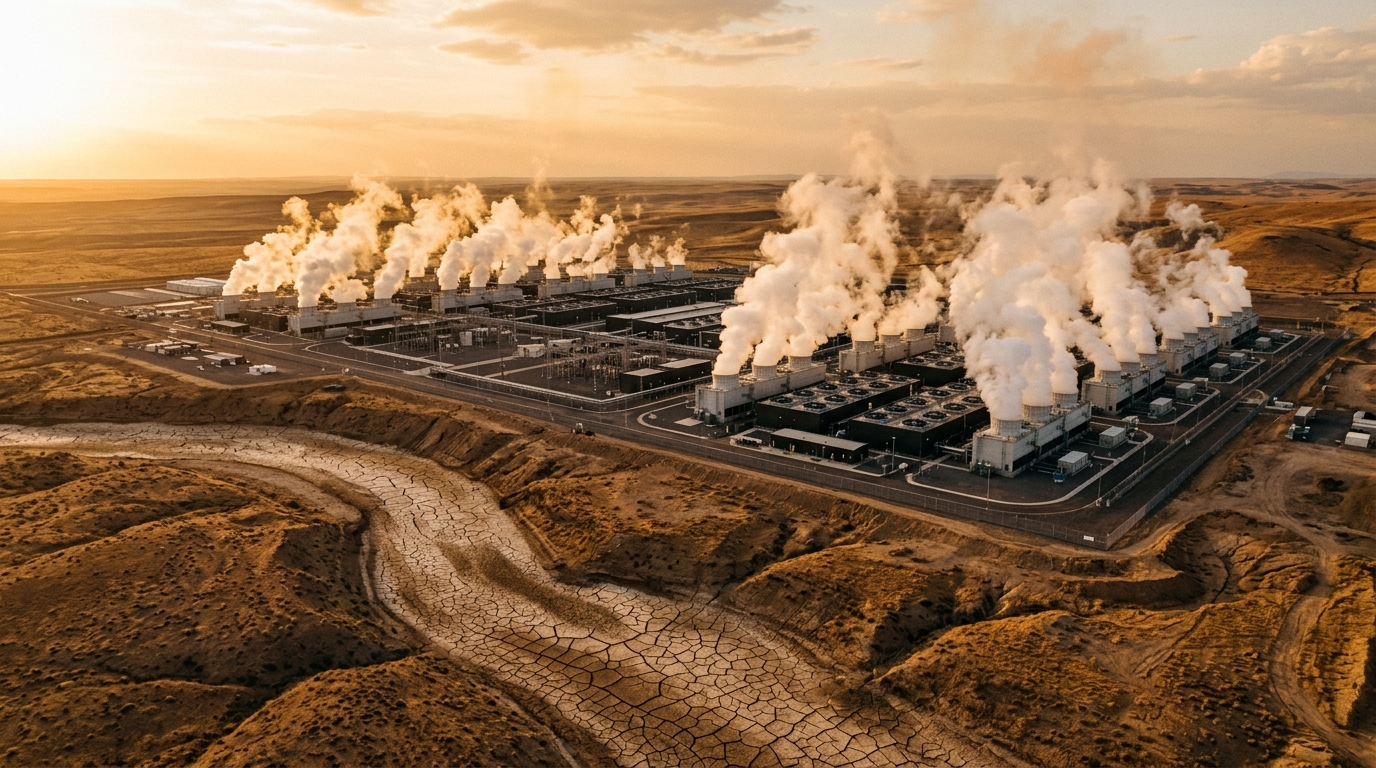
In Montevideo, the tap water tasted of salt.
Uruguay was enduring its worst drought in seventy-four years. The main reservoir had dropped to nine percent of capacity. Authorities, desperate, had begun mixing water from the Rio de la Plata estuary into the public drinking supply. The result was tap water the World Health Organization would not recommend for pregnant women or infants. A poll found that six percent of Uruguayans still drank from the tap — down from sixty-six percent the year before.
At that precise moment, Google announced plans to build a data center in Canelones, southern Uruguay. The facility would consume 7.6 million liters of water per day — equivalent to the domestic daily use of 55,000 people — drawn from the same depleted public water system.
The slogan appeared on walls across Montevideo almost immediately: No es sequía, es saqueo. This is not drought. It is pillage.
The Paradox Has a Name
Chapter 4 of The Great Return named this dynamic the Jevons paradox: as AI makes tasks cheaper and faster, total energy and water demand rises faster than efficiency gains can offset. The paper projected that this would generate community resistance from Aragon to Ireland. What it did not fully anticipate was how visceral that resistance would become — or how clearly it would expose a structural governance failure playing out simultaneously on five continents.
A report published in February 2026 put numbers to the greenwashing dimension. Of 154 AI climate claims from major technology companies, 74 percent were unverified and 36 percent offered no supporting evidence at all. Not one confirmed example existed of a generative AI tool — a chatbot, a coding assistant, an image generator — that had measurably reduced emissions anywhere. The AI-saves-the-planet narrative relies on a deliberate conflation: climate benefits from traditional predictive AI — precision agriculture, smart grid optimization — are used to justify the infrastructure footprint of generative AI, which does none of those things and consumes the infrastructure that is drinking the water.
This is not an emerging concern. It is already happening, everywhere, at scale.

Spain: The Arithmetic of Absurdity
Aragon sits in a semi-arid landscape that has been deteriorating for years. Reservoir levels have dropped below forty percent of capacity. Local farmers depend on shrinking water allocations.
Amazon's planned data center expansion in the region was licensed to withdraw 755,720 cubic meters of water per year — enough to irrigate 233 hectares of maize, one of the region's principal crops — from the same diminishing supply. The coalition Tu Nube Seca Mi Río — Your Cloud Is Drying My River — organized sharp community opposition.
Then, in March 2026, Amazon raised its total investment commitment in Spain to €33.7 billion. The headline of the announcement: AI tools that will help Aragonese farmers use water more efficiently. Amazon will use more water from Aragon to run the AI that will teach Aragon to use less water.
Activist Aurora Gómez called it what it is: "a deliberate strategy of obfuscation." The regional government, presented with €33.7 billion in investment, said nothing publicly about the water arithmetic. The national government said less.
This is not an edge case. It is the template.
United States: Democracy in the Parking Lot
The United States is the origin point of the AI infrastructure boom and the site of its most explosive community resistance. The numbers tell the story before any individual case does.
In the second quarter of 2025 alone, opposition to data centers rose 125 percent. An estimated $98 billion in projects were blocked or delayed — more than the total for all previous quarters since 2023. There are now 188 community opposition groups across 17 states targeting 30 data center projects. By early 2026, communities in at least 14 states had enacted temporary moratoriums on data center development.
The cases are becoming iconic. In Saline, Michigan, rural residents rallied against the $7 billion Stargate data center — backed by OpenAI and Oracle — that was fast-tracked by the state utility DTE Energy. Residents only discovered the project's true backers after county officials had signed NDAs preventing public disclosure. The Michigan Attorney General joined the protest. A Republican and a Democrat co-sponsored legislation to reverse data center tax breaks. The resistance cuts clean across party lines — which, in 2026 America, is remarkable.
In Canton, Mississippi — a majority Black town long marked by underinvestment — Amazon opened a $10 billion AI data center promising 1,000 jobs. Within months, residents reported lung irritation, construction dust settling over homes and playgrounds, and cooling towers pulling millions of gallons daily from the already-stressed Big Black River. "We were promised prosperity, but got poisoned air and vanishing water," said local activist Maria Gonzalez. A class-action lawsuit alleging Clean Water Act violations followed in February 2026.
By 2028, US data centers could collectively consume as much water as 18.5 million households — just for cooling servers.
What makes the US story distinctive is the transparency of the economic capture. Companies that want to construct large data centers target areas with inexpensive real estate and weaker local governments, near large bodies of water. They receive tax breaks from state and local governments competing to attract large tech investors — a Microsoft data center in Washington state received $333 million in sales tax exemptions between 2015 and 2023. The subsidy flows one direction. The water and electricity costs flow the other.
Uruguay: When a Constitutional Right Runs Dry
The Montevideo story deserves its full weight. Uruguay has a constitutional right to fresh drinking water — one of the first countries in the world to enshrine it. When authorities mixed saline water into the public supply during the 2023 drought crisis, they violated a constitutional guarantee to solve a resource problem. Google's planned data center would have drawn 7.6 million liters daily from the same depleted system.
A researcher at the University of the Republic who obtained the project documents through a legal battle put it plainly: Google would generate very little employment, pay no tax — being built in a duty-free zone — and bring serious ecological and social risk in exchange. A UN review warned of "risk of de facto water privatization." The constitutional right to water was being honored in text and undermined in practice.
The project did not proceed in its original form. Uruguay pushed back. It is one of the few cases in the global record where a government held a line.
India: Concentrated in the Wrong Places
Morgan Stanley projects global data center water consumption will reach 1,068 billion liters annually by 2028 — eleven times current levels. India's share doubles from 150 billion liters in 2025 to 358 billion liters in 2030.
Sixty to eighty percent of India's data centers sit in areas already classified as high water stress: Mumbai, Chennai, Hyderabad, Bengaluru. These are cities where water is already divided across competing claims from households, agriculture, and industry. The AI infrastructure boom is not arriving into abundance. It is arriving into existing scarcity, at scale, with minimal national regulatory constraint.
China: The Uncomfortable Benchmark
China is, by every measure, the most aggressive state-directed AI infrastructure builder in the world. It is also the only country to have incorporated data center Power Usage Effectiveness standards and water performance targets into its building code — binding requirements, not voluntary reporting.
The paper's Chapter 3 noted that China accelerated its domestic AI ecosystem following US export controls on advanced semiconductors. What it did not center was this: China simultaneously built regulatory frameworks for data center resource consumption that no democratic government has matched.
The irony is uncomfortable but accurate. The country with the least democratic accountability for technology policy has produced the most binding environmental constraint on how that technology consumes water. Every other government discussed in this piece — Spain, the US, Australia, India — has prioritized investment attraction over resource protection. China prioritized both, and did it through top-down mandate rather than community resistance.
This is not an endorsement of the model. It is a data point that democratic governments should find embarrassing.
The Pattern
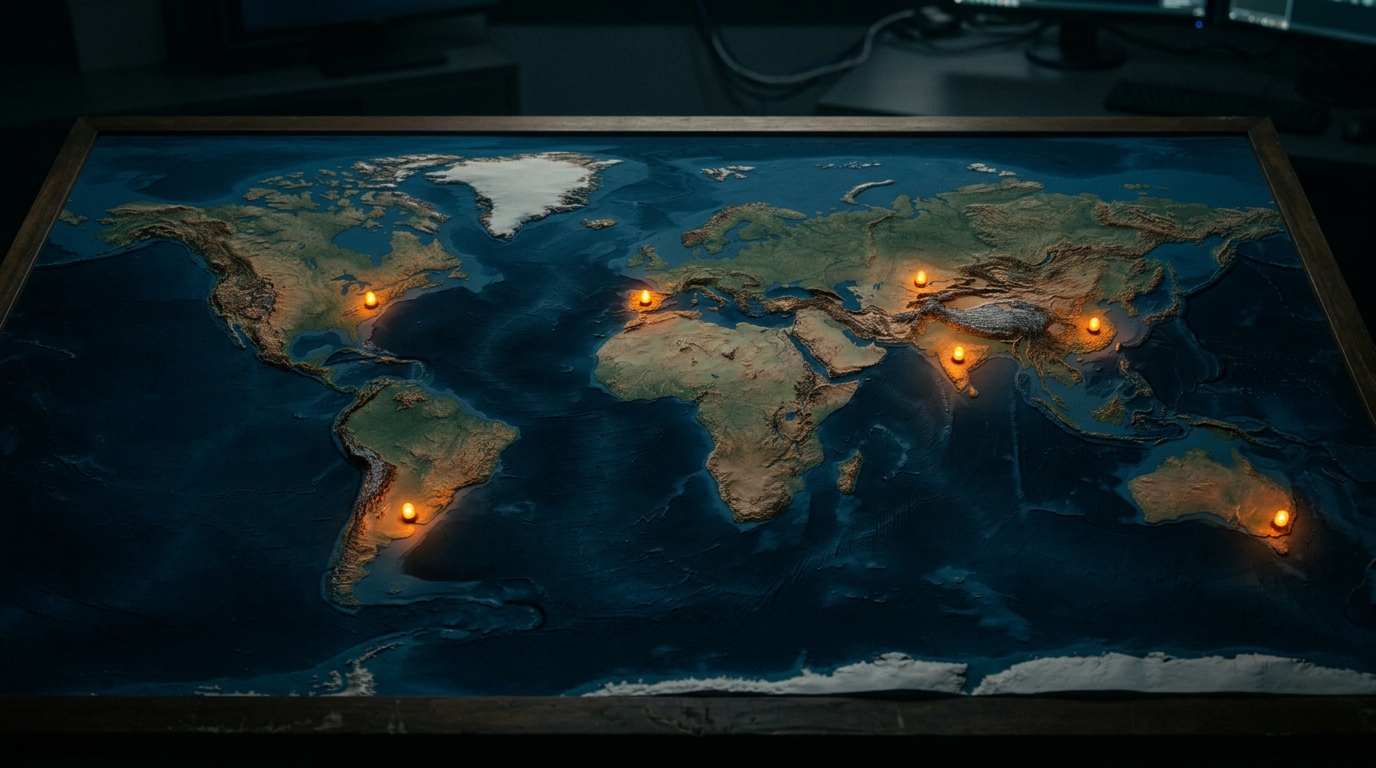
Across every geography, the logic is identical. Investment figures function as the effective answer to every resource concern. The water question is answered with the billion-euro number. The electricity bill question is answered with the jobs announcement. The NDA conceals the details until approval is secured.
The communities bearing the cost are not the communities receiving the tax revenue. The farmers in Aragon are not Amazon shareholders. The residents of Canton, Mississippi breathing construction dust were promised jobs that arrived in smaller numbers than announced. The people of Montevideo who stopped drinking from the tap have no stake in Google's infrastructure roadmap.
Australia, meanwhile, approved every data center application it received since 2021 without water efficiency requirements — becoming, by design, a destination for projects displaced by stricter rules elsewhere. A continent that knows drought intimately, choosing not to know.
What makes this politically unstable — and the US case makes this clearest — is that the resistance is genuinely cross-partisan. In rural Michigan, a Republican and a Democrat co-authored moratorium legislation. In Arizona, a coalition spanning environmental groups and conservative property rights advocates blocked a desert data center together. Communities recognize resource extraction when they experience it, regardless of which party made the approval.
The Only Exit From the Paradox
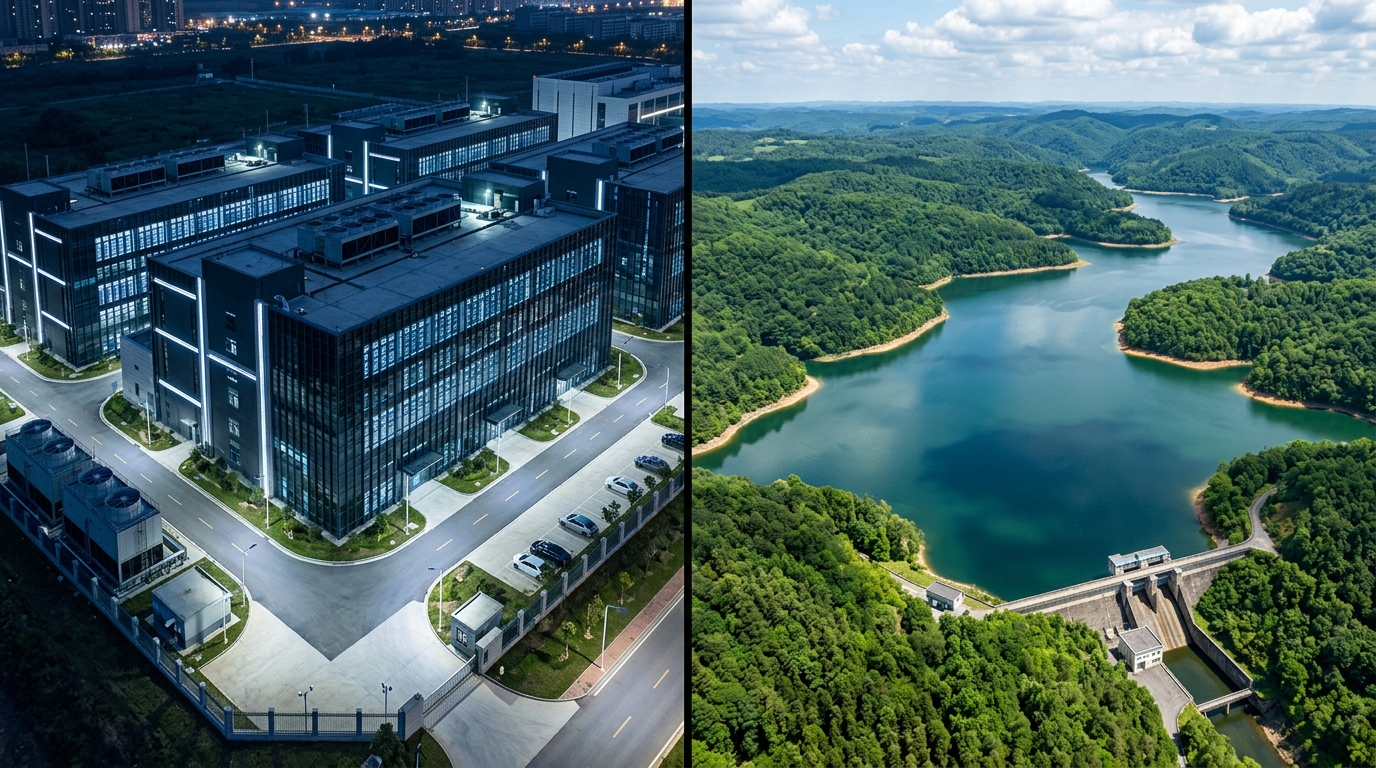
The paper's Chapter 4 made the following argument: local AI inference on NPU hardware presents a categorically different resource profile. No cooling towers. No evaporative water loss. No facility overhead. A laptop NPU running a local model consumes approximately 0.002 watt-hours per query — against an estimated 2.9 watt-hours for the same query processed in a hyperscale data center. A factor of one thousand. The water difference is categorical: zero direct consumption versus up to two million liters per day for a single large facility.
This is not a complete solution to the global resource problem of AI infrastructure. Manufacturing NPU-equipped devices carries its own footprint. The aggregate electricity demand of distributed local devices raises grid management questions. The paper acknowledged both.
But the direction is clear. The centralized model concentrates resource consumption in specific, often already-stressed locations, and makes it invisible to the users generating the demand. The query is instant and clean in the office. The water is running low in Aragon.
Local inference does not eliminate the resource question. It distributes it back to where the use occurs, scales it to the actual compute performed, and removes the facility overhead that multiplies every query's footprint by a factor of one thousand. For the farmers of Aragon, the residents of Saline Township, and the people of Montevideo who stopped drinking from the tap, that difference is not technical. It is physical.
What to Watch
The EU Energy Efficiency Directive's data center provisions are under review in 2026, with potential expansion to include binding water targets — not just reporting requirements. The gap between those two things is the gap between accountability and theater.
Aragon's medieval water courts — governing allocation since the twelfth century — have been asked to rule on the Amazon data center licenses. That ruling, when it arrives, will be the first time a pre-industrial democratic water institution has adjudicated a claim from a twenty-first century hyperscaler. Whatever they decide, it will be worth reading.
The paper's June update will carry the first enterprise adoption data for local AI inference in European organizations. The infrastructure argument and the resource argument point to the same conclusion. The question is how many organizations are connecting them.
This investigation update is part of an ongoing research series tracking the predictions made in The Great Return: Why 2026 Marks the Tipping Point for Local AI Migration in Europe — published February 2026. Full paper available at Zenodo.